

The Roof Replacement Process: What Iowa Homeowners Should Expect
September 09,2026
10 Minute Read
Replacing your roof is one of the largest home projects most Iowa families will ever take on, and if a hailstorm or straight-line wind event pushed you into it, you probably didn’t have months to prepare for it emotionally or financially. That uncertainty is exactly why this guide exists. Below is the honest, start-to-finish picture of the roof replacement process in Iowa: how the work actually happens, how long it really takes, how to prepare, and the day-of realities most contractors would rather you not think about until the dumpster is already in your driveway.
We wrote this the way we’d explain it to a neighbor across the kitchen table. No pressure, no jargon, and no pretending a roof replacement is quieter, faster, or simpler than it is. (Wondering about the money side instead? Our Iowa roof cost guide covers 2026 pricing, our insurance claims guide covers how storm claims pay out, and our roof financing guide covers how to pay for whatever insurance doesn’t. This page is about the experience itself.)
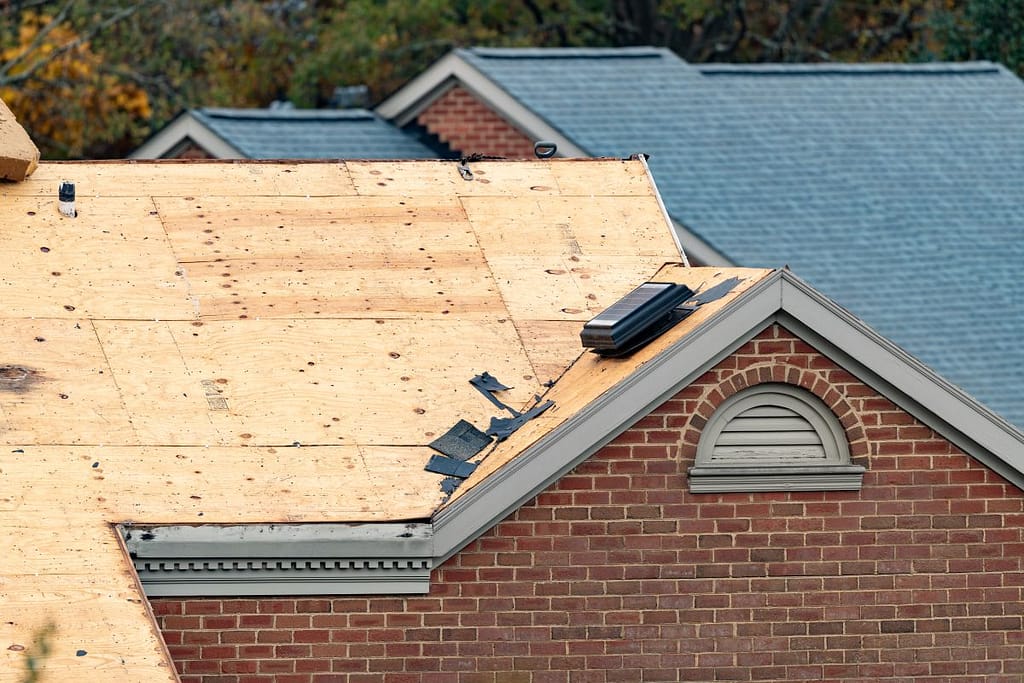
How Does the Roof Replacement Process Work, Step by Step?
A quality replacement is a system, not just “new shingles.” Here’s the sequence a professional crew follows from bare deck to final cleanup.
- Tear-off. The old shingles, underlayment, and flashing are stripped down to the bare wood decking. This is the loudest, messiest phase.
- Deck inspection. With the roof exposed, the crew checks the decking for rot, soft spots, and water damage, and replaces any compromised sheets.
- Drip edge. Metal drip edge is installed along the eaves and rakes to direct water into the gutters and away from the fascia.
- Ice-and-water shield. A self-adhering waterproof membrane goes on at the eaves, valleys, and around penetrations, required by Iowa code (more on that below).
- Underlayment. Synthetic underlayment (or felt) covers the rest of the deck as a secondary water barrier.
- Starter shingles. A starter course is installed along the edges to lock down the first row and resist wind uplift.
- Field shingles and flashing. The main shingles go on in an offset pattern, with new flashing installed at chimneys, walls, and vents.
- Ridge cap and cleanup. Ridge-cap shingles and ventilation finish the peak, then the crew does a full cleanup and runs magnetic rollers over your yard, driveway, and flower beds to collect stray nails.
What Happens if the Crew Finds Rotten Decking?
This is the single most common “surprise” of a roof replacement. Once the old roof comes off, hidden rot or delamination sometimes appears, especially on older Iowa homes built in the early-to-mid 1900s. Replacing decking adds roughly $75 to $150 per sheet, and a reputable contractor will document it with photos and get your approval before proceeding. Ask up front how decking replacement is handled and priced so it’s never a shock on the invoice.
What Does a Quality Installation Include?
The difference between a roof that lasts 18 years and one that lasts 28 comes down to details that are easy to skip: a proper ice-and-water barrier, balanced intake-and-exhaust attic ventilation, correctly nailed shingles (six nails per shingle in high-wind zones), and new flashing rather than reused flashing. Cheap bids often cut exactly these corners, which is one reason comparing estimates line by line matters more than comparing bottom-line prices. Our guide to hiring a roofing contractor in Iowa walks through how to vet the company doing the installing, which matters more than the shingle brand. A premium shingle installed poorly still fails.
How Long Does a Roof Replacement Really Take?
Here’s where a lot of homeowners feel misled, so we’ll give it to you straight.
The Install: 1 to 3 Days
The physical replacement of an average Iowa home’s roof usually takes one to three days. A single-story home under about 2,500 square feet with a moderate pitch is often a one-day job. Larger, steeper, or multi-plane roofs, or ones that need significant decking work, stretch to two or three days.
The Honest Full Timeline: 2 to 12 Weeks
The install is fast. The project is not. From your first inspection to the final nail, the whole thing typically runs two to twelve weeks once you account for the estimate, insurance approval (if it’s a storm claim), permitting, material ordering, and getting on the crew’s schedule. Anyone who promises your entire project will be “done in three days” is only talking about the install and skipping the four to eleven weeks that usually come first.
What Can Delay Your Project
- Iowa weather: rain, wind, and cold snaps stop roofing work cold.
- Insurance approval: waiting on an adjuster and a finalized scope.
- Permitting: municipal processing time.
- Material lead times: specific shingle colors or Class 4 products can be backordered.
- Peak season: spring and early summer, right after storm season, are the busiest and slowest to schedule.

How Should You Prepare Your Home for Roofing Day?
A little prep protects your belongings and makes the crew’s job faster and cleaner.
Your Day-Before Checklist
- Move vehicles out of the driveway and garage so the crew has dumpster and material access, and cars stay clear of falling debris.
- Relocate patio furniture, grills, and potted plants away from the house.
- Take down wall décor and shelves, especially fragile items; the vibration from tear-off can rattle walls.
- Cover or box attic belongings; dust and debris commonly sift down during tear-off.
- Clear a path to the exterior outlets if the crew needs power.
What to Do With Kids and Pets
Roofing day is loud enough to stress animals and young children. Plan to keep pets in an interior room, at a friend’s house, or at daycare for the day. If anyone in the home works nights or is noise-sensitive, plan around the fact that the loudest work happens early.
Talk to Your Neighbors First
A quick heads-up to adjacent neighbors about the noise and the dumpster goes a long way, and it’s just good Iowa manners.
What Is Roofing Day Actually Like? (The Honest Version)
Here’s the part most contractors gloss over. Knowing it in advance makes the day far less stressful.
How Loud Is It?
Very. Tear-off and nailing transmit directly through the roof structure into your ceilings and walls, loud enough to rattle picture frames and make phone calls difficult. It’s a full workday of hammering above your head. This is normal and temporary.
Should You Stay Home or Leave?
You can absolutely stay in most cases; you don’t need to move out. That said, many homeowners with the flexibility to work elsewhere for the day are happier doing so, especially with young kids, pets, or remote-work calls. There’s no safety requirement to leave.
Dust in the Attic and Cosmetic Cracks
As the old roof is stripped, decades of accumulated dust can drift down through the attic and around ceiling fixtures. Occasionally, the vibration causes minor cosmetic drywall cracks or nail pops. A good contractor warns you about this ahead of time rather than acting surprised when you mention it.
Do Your Gutters Get Removed? Will Your Landscaping Survive?
Gutters usually stay on unless they’re being replaced too, though drip edge and flashing work happens right at the gutter line. A professional crew protects landscaping with tarps and plywood, keeps ladders off delicate beds, and photographs the yard beforehand. Point out any prized plants, irrigation heads, or landscape lighting before work starts.
Cleanup and the Magnet Sweep
Roofing produces thousands of nails. A quality crew tarps as they go, hauls debris to the dumpster, and runs magnetic rollers across your lawn, driveway, and beds at the end, often more than once. Ask whether a final magnet sweep is included; it should be.

What Happens After Your New Roof Is Installed?
The job isn’t done when the crew drives off.
Final Walkthrough and Inspection
Walk the property with your contractor (or their project manager). Confirm cleanup is complete, look for stray nails, and make sure gutters are clear of debris. If a municipal inspection is part of your permit, confirm it’s scheduled and passed.
Register Your Warranty
Manufacturer warranties often require registration within a set window to unlock their full term; Owens Corning’s top warranties, for example, must be registered within 60 days of installation. Make sure your contractor registers it or gives you the paperwork to do so, and keep your final invoice and warranty documents together. Our Owens Corning warranty guide explains what each warranty level actually covers.
Maintenance to Protect Your Investment
Keep gutters clear, trim overhanging branches, check the attic for moisture after the first heavy rain and first snow, and get a professional inspection after any significant hail or wind event; hail damage is often invisible from the ground. Small, timely maintenance is what carries an Iowa roof to the top of its lifespan.
What Permits and Code Rules Apply in Iowa?
A full roof replacement requires a building permit in Des Moines and most Iowa municipalities. Permit fees are modest (often under about $100 for a residential re-roof), and your contractor typically pulls it. Iowa code also requires an ice-and-water barrier at the eaves (extending at least 24 inches inside the exterior wall line, because Des Moines’ average January temperature is below the code threshold) and limits roofs to a maximum of two layers of shingles. If two layers already exist, a full tear-off is required. Confirm your city’s current fee and code cycle, since Des Moines adopts the 2024 building-code family beginning January 1, 2026.
Roof Replacement Process FAQs
How long does it take to replace a roof? The physical install usually takes one to three days for an average Iowa home. But the full project, including the estimate, insurance approval, permit, material order, and scheduling, typically runs two to twelve weeks from start to finish.
Do I need to leave my house during a roof replacement? No. You can stay home in nearly all cases; there’s no safety requirement to leave. Many homeowners with young kids, pets, or remote-work calls simply prefer to be elsewhere because of the noise.
Is a roof replacement really loud? Yes. Tear-off and nailing transmit directly through the structure and can rattle walls and picture frames. It’s a full day of hammering overhead, but it’s normal and temporary.
What should I do with my pets during a roof replacement? Keep them in an interior room away from the noise, board them, or send them to a friend’s for the day. The pounding and crew activity stresses most animals.
Do my gutters get removed during a roof replacement? Usually not, unless you’re replacing them too. Drip edge and flashing work happens at the gutter line, and a good crew protects the gutters during the job.
Will roof replacement damage my landscaping or driveway? It shouldn’t. A professional crew tarps beds, keeps ladders off plants, photographs the yard first, and runs magnetic nail sweeps afterward. Point out prized plants and irrigation heads before work starts.
What happens if the roofers find rotten decking? They replace it, typically at $75 to $150 per sheet, and a reputable contractor documents it with photos and gets your approval before proceeding.
Ready for a Roof That’s Done Right?
Now you know what the process actually looks like: the eight steps, the honest timeline, and the parts nobody warns you about. When you’re ready, reach out to our central Iowa roofing team for an honest inspection and a written, itemized estimate, and we’ll walk you through every step above before a single shingle comes off.
This guide is educational and reflects general Iowa market conditions and law as of 2026. Costs, insurance terms, and code requirements vary by home, carrier, and municipality. Always confirm specifics with your insurer, your local building department, and a licensed Iowa contractor.

Get Started Today!
From roofing to siding, Heartland Roofing is the team you need to take your home exterior to the next level. All you need to do is reach out! Fill out our contact form or give us a call to get the reliable help that you need.


