
Ice Dams in Iowa: What Homeowners Should Know Before Winter
October 23,2026
8 Minute Read
An ice dam is a ridge of ice that forms at the edge of your roof and traps melting snow behind it. That water can back up under your shingles and leak into ceilings and walls, and in many Iowa homes the problem starts with heat escaping from your living space into the attic.
With cold weather settling in across Iowa, fall is the best time to find the cause. The fixes are easier before snow covers the roof and the attic turns into an icebox.
At Heartland, we see the aftermath every spring: stained ceilings, loose gutters, and soffit pulling away from the roof. Below are straight answers to the ice dam questions Iowa homeowners ask us most.
How Ice Dams Form on Iowa Roofs
What is an ice dam, and why does it cause leaks?
An ice dam forms when warm spots on your roof melt snow and that water refreezes at the colder eaves. The ice builds into a ridge that blocks drainage. Water then pools behind it, works under your shingles, and drips into your attic, insulation, and ceilings.
Iowa State University’s AnswerLine explains that ice dams form when the lower roof surface stays below 32 degrees while the upper surface stays above it for a prolonged time. The Department of Energy’s Building America Solution Center notes they can form with as little as 2 inches of snow on a roof.
Why does my house get ice dams when my neighbor’s doesn’t?
The difference is usually what’s happening in your attic, not your shingles. Homes that leak warm air into the attic, or have thin insulation, heat the roof deck and melt snow from below. A cold, well sealed attic keeps the whole roof the same temperature, so snow sits evenly.
University of Minnesota Extension calls air leakage the major mode of heat transfer behind ice dams in many homes. Other heat sources it lists include chimneys, exhaust vents that end just above the roof, and leaky ductwork in the attic. Recessed lights and skylights also raise the risk.
Spotting Ice Dam Trouble
How can I tell if I have an ice dam or just icicles?
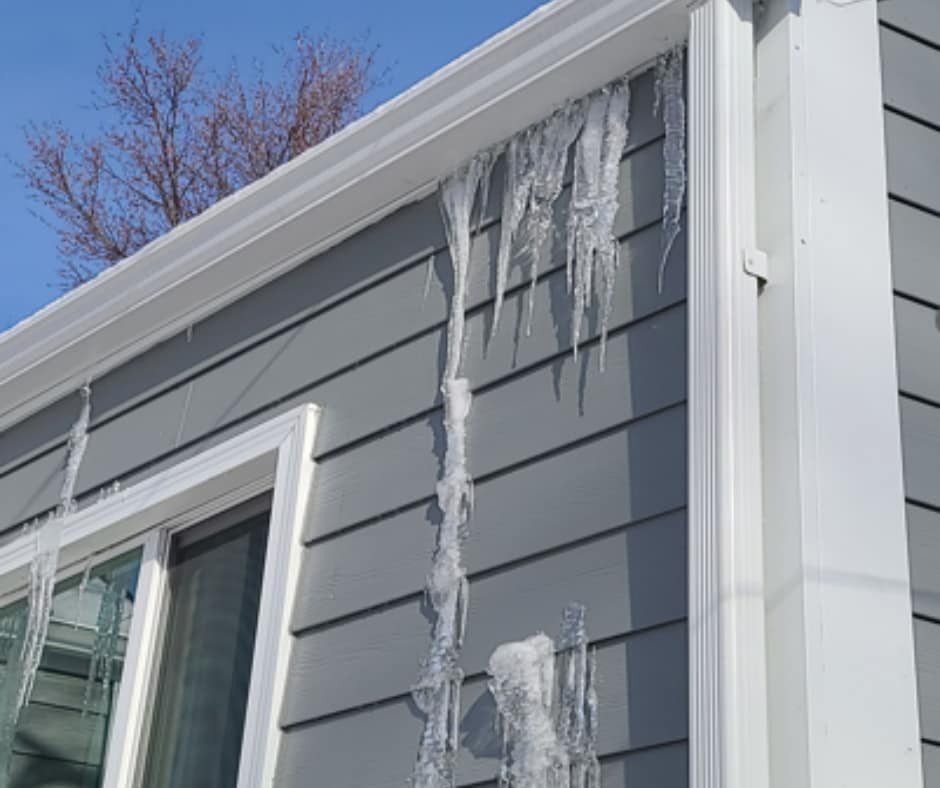
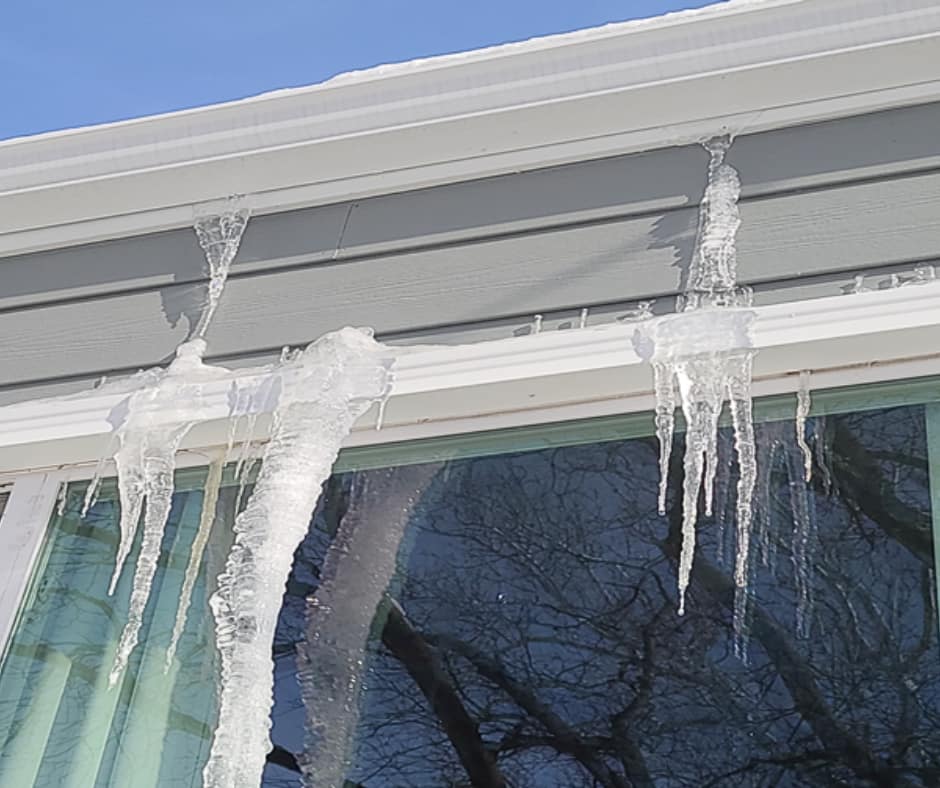
A few icicles on their own aren’t a problem. Watch for a thick band of ice along the roof edge with snow or slush behind it, gutters packed solid with ice, or icicles that form on the same stretch of roof every winter. Those point to heat escaping in that spot.
Inside, look for water stains on ceilings near exterior walls and damp insulation in the attic. After a fresh snow, check your roof from the ground. If snow melts first over one room or one section, that’s likely where heat is leaking. Gutters don’t cause ice dams, but ice filled gutters are often the first clue.
Can ice dams damage my siding, soffit, and gutters too?
Yes. Ice dams don’t only hurt shingles. Trapped water can run behind fascia boards and down inside walls, and the weight of ice can bend gutters or pull them loose. Over several winters, that repeated soaking can rot wood trim and leave soffit sagging away from the roof.
University of Minnesota Extension warns that backed up water can damage walls, ceilings, and insulation, and that ice dams can lead to mold. If your trim has pulled away, have the roof edge and attic checked before replacing it. Our guide to soffit and fascia repair in Iowa explains why vented soffit helps but won’t stop ice dams by itself.
What to Do When an Ice Dam Forms
Is it safe to chip ice off my roof myself?
We don’t recommend it. Chipping with a hammer, shovel, or pick can crack shingles and gouge flashing, and an icy roof or ladder is dangerous. Using a roof rake from the ground to pull snow off the lower few feet of roof is a safer short term step.
Iowa State’s AnswerLine suggests a roof rake or push broom, while taking care not to damage the roof surface. In an emergency, it also suggests using a hose to cut channels through the dam so trapped water can drain. University of Minnesota Extension notes those channels stop working within days, so plan the permanent fix.
Do heat cables stop ice dams?
Heat cables can keep a drain path open along a known trouble spot, but they don’t fix the cause. The heat loss that melts snow higher on your roof keeps going. Think of cables as a bandage for one stretch of roof, not a cure for the whole house.
They use electricity whenever they run and need careful installation. If you have a shaded valley or a low porch roof that ices up every year, cables can make sense alongside air sealing and insulation. They just aren’t a substitute for either one.
Will my homeowners insurance cover ice dam damage?
It depends on your policy and your carrier, so call your agent before starting repairs. In the meantime, photograph the ice and any interior damage, write down dates, and keep receipts for emergency steps like drying out wet insulation.
Water damage is a common claim. The Insurance Information Institute reports that water damage and freezing claims averaged 1.50 claims per 100 house years (100 homes insured for one year) from 2019 through 2023, with an average claim of $15,400. Be cautious of anyone knocking on doors after an ice storm promising insurance will buy you a new roof.
Preventing Ice Dams Before Next Winter
Will adding attic insulation stop ice dams?
Insulation helps, but sealing air leaks comes first. Warm, moist air slipping through gaps into the attic is the main heat source in many homes. Seal those gaps around hatches, lights, and pipes, then add insulation so less heat reaches the roof deck. Doing both keeps the roof evenly cold.
ENERGY STAR recommends R60 for an uninsulated attic in climate zones 5 and 6, which cover Iowa, or R49 if you already have 3 to 4 inches. If you can see the tops of your attic floor joists, you likely need more. Our guide to attic insulation for Iowa homes walks through your options.
What should a new roof include to help prevent ice dams?
Ask about two things: an ice and water barrier at the eaves and balanced attic ventilation. The barrier is a sticky, waterproof layer under the shingles that helps keep backed up water out. Ventilation, with intake at the soffit and exhaust near the ridge, helps keep the roof deck cold.
Where a local code requires an ice barrier, the International Residential Code says it must reach at least 24 inches inside the exterior wall line. The City of Grinnell, for example, cites this rule from its adopted 2015 code. University of Minnesota Extension also advises against powered attic fans as an ice dam fix because they can create negative pressure in your home.
When should I call a roofer about ice dams?
Call if you see water inside, ice dams in the same spot every year, gutters pulling loose, or a roof nearing the end of its life. Fall is the easiest time, because the roof edge and attic can be checked before snow covers everything up.
During a free inspection, tell us about past ice buildup, leaks, or ceiling stains. Those are the signs that call for an attic check, so please make sure someone is home during the inspection so we can check the attic as well. Here’s what to expect from a roof inspection. If replacement makes sense, every full replacement we complete carries our 10 year labor and workmanship warranty. As an Owens Corning Platinum Preferred contractor, we can also offer upgraded Owens Corning system warranties.
Ready to Talk Through Your Ice Dam Questions?
If ice dams have caused trouble at your house, or you want to head them off before the snow flies, we’re glad to help. We’ll schedule a free inspection, check your roof edge and ventilation, look in the attic, and walk you through what we find and your options. No pressure, no scare tactics.
Call us at (515) 981-3838 or learn more about our roofing services across Iowa.
Sources
- Attic Air Sealing, Insulating, and Ventilating for Ice Dam Prevention, Building America Solution Center, U.S. Department of Energy
- Ice Dams, AnswerLine, Iowa State University Extension and Outreach
- Dealing with and Preventing Ice Dams, University of Minnesota Extension
- Recommended Home Insulation R Values, ENERGY STAR
- Facts and Statistics: Homeowners and Renters Insurance, Insurance Information Institute
- City of Grinnell Adopted Codes and Shingle Requirements, City of Grinnell, Iowa

Get Started Today!
From roofing to siding, Heartland Roofing is the team you need to take your home exterior to the next level. All you need to do is reach out! Fill out our contact form or give us a call to get the reliable help that you need.


