

Attic Insulation: 4 Types, R-Values & Costs for Iowa Homes
October 12,2026
10 Minute Read
Attic insulation is one of the highest-return upgrades an Iowa homeowner can make, because so much of a home’s heat escapes through the top of the house in our long, cold winters. The right insulation keeps you warmer in winter, cooler in summer, and lowers your energy bills year-round, but choosing between the types and R-values can be confusing. This guide breaks down the four main types of attic insulation, the R-values recommended for Iowa’s climate, what each costs, and how to choose the right fit. The goal is to help you invest wisely in your home’s comfort and efficiency.
Here is what you will learn:
- The four types: The main attic insulation options compared.
- R-values for Iowa: How much insulation our climate calls for.
- Costs: What each type typically runs and how to choose.
Why Attic Insulation Matters in Iowa
In Iowa’s climate, attic insulation is one of the most cost-effective ways to control energy bills and stay comfortable. Understanding why makes it a clear priority.
Heat Escapes Through the Attic
Because heat rises, a poorly insulated attic lets your heated air escape straight out the top of your home all winter long. That forces your furnace to work harder and run longer, driving up energy bills, and in summer it lets attic heat press down into your living space. Proper attic insulation slows that heat transfer in both directions, keeping conditioned air where you want it. In Iowa’s climate of cold winters and hot summers, that makes the attic the first place to look for energy savings.
- Heat rises: A weak attic lets warm air escape in winter.
- Harder HVAC: Your furnace runs longer and costs more.
- Summer too: Attic heat presses down into living space.
- First priority: The attic is the top spot for savings.
The Right R-Value for Iowa Homes
The key measure for attic insulation is R-value, which measures resistance to heat flow, and Iowa’s cold climate calls for a high one. According to ENERGY STAR, homes in climate zones 5 and 6, which cover Iowa, should have attic insulation of R60 if the attic is uninsulated, or R49 when adding to an attic that already has three to four inches. Reaching that level is what delivers the full comfort and energy savings. For homeowners across West Des Moines and surrounding areas, hitting the recommended R-value is the goal of any attic insulation project.
- R-value matters: It measures resistance to heat flow.
- Iowa is cold: Zones 5 and 6 call for high R-values.
- The target: R60 for an uninsulated attic, R49 when adding.
- Full savings: Reaching the recommended level is the goal.
4 Types of Attic Insulation
The four types below are the main options for insulating an Iowa attic, each with its own strengths. This section introduces them, then breaks each one down so you can compare.
1. Fiberglass Batts
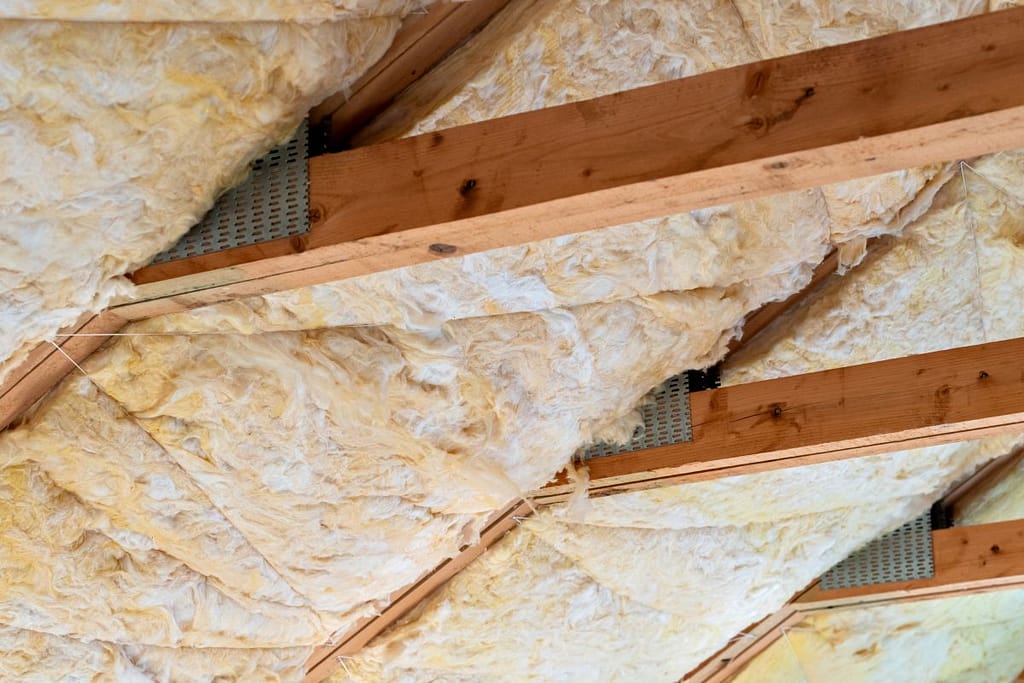
Fiberglass batts are the familiar rolls or pre-cut sections of insulation, valued for being affordable and widely available. They work well in attics with standard joist spacing and few obstructions, and they are the most common do-it-yourself option. The trade-off is that batts can leave gaps around wiring, framing, and irregular spaces, which reduces their real-world performance if not installed carefully. For a straightforward attic, fiberglass batts are a budget-friendly, proven choice.
- Familiar rolls: Pre-cut sections of insulation.
- Budget-friendly: The most affordable, DIY-friendly option.
- Watch the gaps: Can leave spaces around framing.
- Best for: Standard, unobstructed attics.
2. Blown-In Fiberglass or Cellulose
Blown-in insulation, made of loose fiberglass or cellulose, is blown into the attic to fill spaces evenly, making it excellent for existing homes. Because it conforms around wiring, framing, and irregular areas, it provides more complete coverage than batts and is ideal for topping off existing insulation. Cellulose is made largely from recycled material, while blown-in fiberglass is lightweight and widely used. For most Iowa attic upgrades, blown-in insulation offers an excellent balance of coverage and value.
- Fills evenly: Conforms around framing and wiring.
- Great for retrofits: Ideal for topping off existing attics.
- Two options: Cellulose or fiberglass.
- Best for: Complete coverage in existing homes.
3. Spray Foam
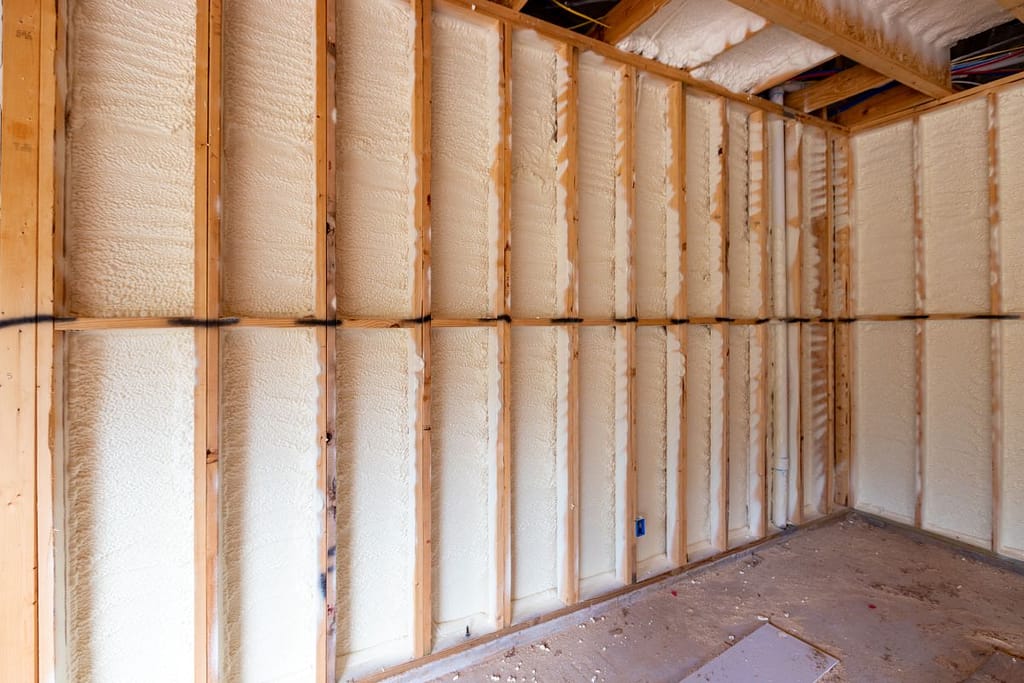
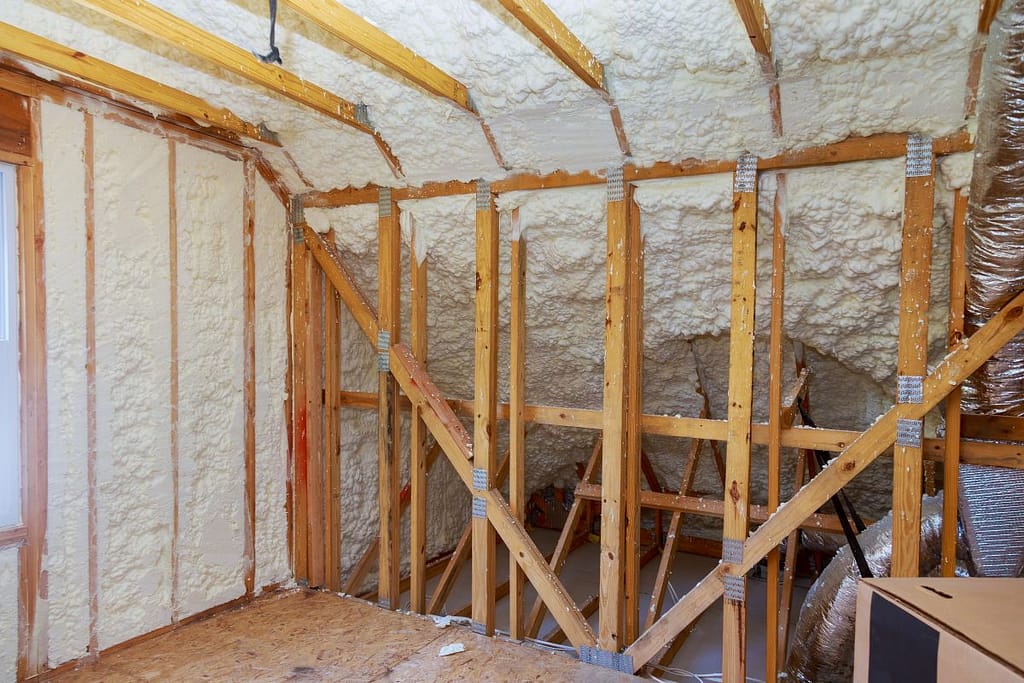
Spray foam insulation expands to seal gaps and provides the highest R-value per inch, along with air sealing that other types cannot match. It creates an air barrier as it cures, sealing the leaks that let conditioned air escape, and it excels in attics with complex shapes or where air sealing is a priority. The trade-off is a higher cost and the need for professional installation. For homeowners prioritizing maximum efficiency and air sealing, spray foam is the premium choice.
- Seals and insulates: Creates an air barrier as it cures.
- Highest R per inch: The most insulating by thickness.
- Premium cost: More expensive, professionally installed.
- Best for: Air sealing and complex attic shapes.
4. Mineral Wool
Mineral wool, also called rock wool, is a dense batt or loose-fill insulation prized for its fire resistance and sound dampening. It resists fire and moisture better than many materials and provides solid thermal performance along with noise reduction. It costs more than standard fiberglass but less than spray foam, sitting in the middle of the range. For homeowners who value fire resistance and quiet along with insulation, mineral wool is a strong option.
- Fire-resistant: Naturally resists fire and moisture.
- Sound dampening: Reduces noise as well as heat loss.
- Mid-range cost: More than fiberglass, less than spray foam.
- Best for: Fire resistance and noise reduction.
How Much Does Attic Insulation Cost?
Cost depends on the type, your attic’s size, and how much insulation you need to reach the right R-value. Here are realistic 2026 ranges.
Typical Attic Insulation Costs
Attic insulation is generally one of the more affordable home upgrades, especially for the energy savings it returns. According to Angi, insulating an attic averages around $2,100, typically ranging from about $1,700 to $2,500, or roughly $1 to $3 per square foot installed. The type of insulation is the biggest factor, with batts and blown-in at the lower end and spray foam at the higher end. For homeowners in West Des Moines and surrounding areas, an itemized estimate based on your attic gives the real number.
- Typical project: Around $1,700 to $2,500 on average.
- Per square foot: Roughly $1 to $3 installed.
- Type drives cost: Batts and blown-in cost least.
- Get an estimate: Your attic’s size sets the final price.
Cost by Insulation Type
The insulation type you choose has the biggest effect on cost, from budget-friendly fiberglass to premium spray foam. Fiberglass batts and blown-in insulation generally run about $1 to $3 per square foot installed, mineral wool sits a bit higher, and spray foam typically runs $1.50 to $5 per square foot because of its air-sealing performance and professional installation. Removing old insulation, if needed, adds to the total. Weighing upfront cost against energy savings and performance helps you choose the right type.
- Fiberglass and blown-in: The most affordable per square foot.
- Mineral wool: Sits in the middle of the range.
- Spray foam: The premium option at a higher cost.
- Extras: Old insulation removal can add to the total.
How to Choose the Right Attic Insulation
With four solid options, the right choice depends on your attic, your goals, and your budget. A few considerations point the way.
Match the Type to Your Attic and Goals
The best insulation for you depends on whether you are topping off an existing attic, prioritizing air sealing, or working with a tight budget. Blown-in is ideal for adding to existing insulation, spray foam is best when air sealing matters most, fiberglass batts suit simple attics and tighter budgets, and mineral wool fits when fire resistance and sound matter. Reaching the recommended R-value matters more than the specific type you pick. Matching the material to your situation gets you the best result.
- Topping off: Blown-in excels in existing attics.
- Air sealing: Spray foam leads when that is the priority.
- Tight budget: Fiberglass batts are the value choice.
- Reach the R-value: Hitting the target matters most.
Why Professional Installation Helps
While some attic insulation is a do-it-yourself project, professional installation ensures full coverage, proper air sealing, and the right R-value for Iowa’s climate. Professionals know how to avoid the gaps and compression that undercut performance, address air leaks first, and safely handle insulation around wiring and fixtures. They also ensure you reach the recommended R-value rather than falling short. For the best comfort and energy savings, professional installation protects your investment.
- Full coverage: Pros avoid performance-robbing gaps.
- Air sealing first: Leaks are addressed before insulating.
- Right R-value: Ensures you hit the Iowa target.
- Protects the investment: Proper work maximizes savings.
Frequently Asked Questions
What R-value do I need for my attic in Iowa?
Iowa falls in climate zones 5 and 6, where ENERGY STAR recommends R60 for an uninsulated attic, or R49 when adding to an attic that already has three to four inches of insulation. Reaching that level delivers the full comfort and energy savings. A professional can confirm your current level and what you need.
How much does attic insulation cost?
Attic insulation averages around $1,700 to $2,500, or roughly $1 to $3 per square foot installed, depending on the type and your attic’s size. Fiberglass and blown-in are the most affordable, while spray foam costs more. A professional estimate based on your attic gives an accurate figure.
Which type of attic insulation is best?
There is no single best type, since each suits different needs. Blown-in is great for existing attics, spray foam excels at air sealing, fiberglass batts are budget-friendly, and mineral wool offers fire resistance. The right choice depends on your attic, goals, and budget, and reaching the recommended R-value matters most.
Can I add new insulation over old insulation?
In many cases, yes. Blown-in insulation is often added on top of existing insulation to reach a higher R-value, as long as the old insulation is dry and in good condition. If the existing insulation is wet, moldy, or damaged, it should be removed first. A professional can assess what makes sense.
Does attic insulation really save money?
Yes. Because so much of a home’s heat loss happens through the attic, proper insulation reduces heating and cooling costs meaningfully in Iowa’s climate. The savings add up year after year, helping the upgrade pay for itself over time. Comfort improves immediately as well.
How do I know if I need more attic insulation?
A common sign is being able to see your attic floor joists, which usually means your insulation is below the recommended level. High energy bills, uneven temperatures, and ice dams in winter can also point to insufficient insulation. A professional inspection confirms your current R-value and whether a top-off is worthwhile.
Why Heartland Is a Smart Choice for Your Attic Insulation
Attic insulation is one of the smartest investments you can make in your home’s comfort and energy costs, and getting it installed correctly is what delivers the full return. Heartland Roofing, Siding & Solar helps homeowners across West Des Moines and surrounding areas choose the right insulation type and reach the R-value Iowa’s climate calls for, with proper air sealing and complete coverage, all backed by honest, educational guidance rather than high-pressure sales. With an A+ BBB rating and a commitment to quality workmanship, Heartland makes sure your attic works as hard as it should. Reach out to Heartland today for a free inspection and expert guidance on your attic insulation.

Get Started Today!
From roofing to siding, Heartland Roofing is the team you need to take your home exterior to the next level. All you need to do is reach out! Fill out our contact form or give us a call to get the reliable help that you need.


