

Are Solar Panels on Flat Roof a Good Idea? (Pros & Cons)
March 23,2026
5 Minute Read
Installing solar panels on flat roof systems has become increasingly common for both residential and commercial properties. Flat roofs offer unique installation advantages, but they also come with specific structural and drainage considerations. For property owners in Ames and surrounding areas, understanding the pros and cons helps determine whether a flat roof solar system is the right investment.
- Energy savings: Solar systems can significantly reduce long-term electricity costs.
- Roof compatibility: Flat roofs allow flexible panel positioning.
- Structural planning: Proper mounting and drainage design are critical.
How Solar Panels Work on Flat Roofs
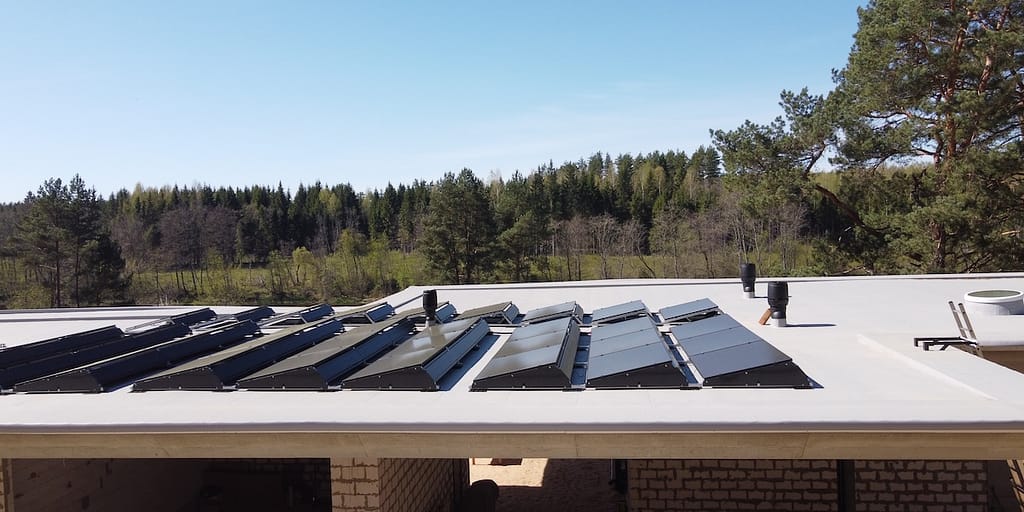
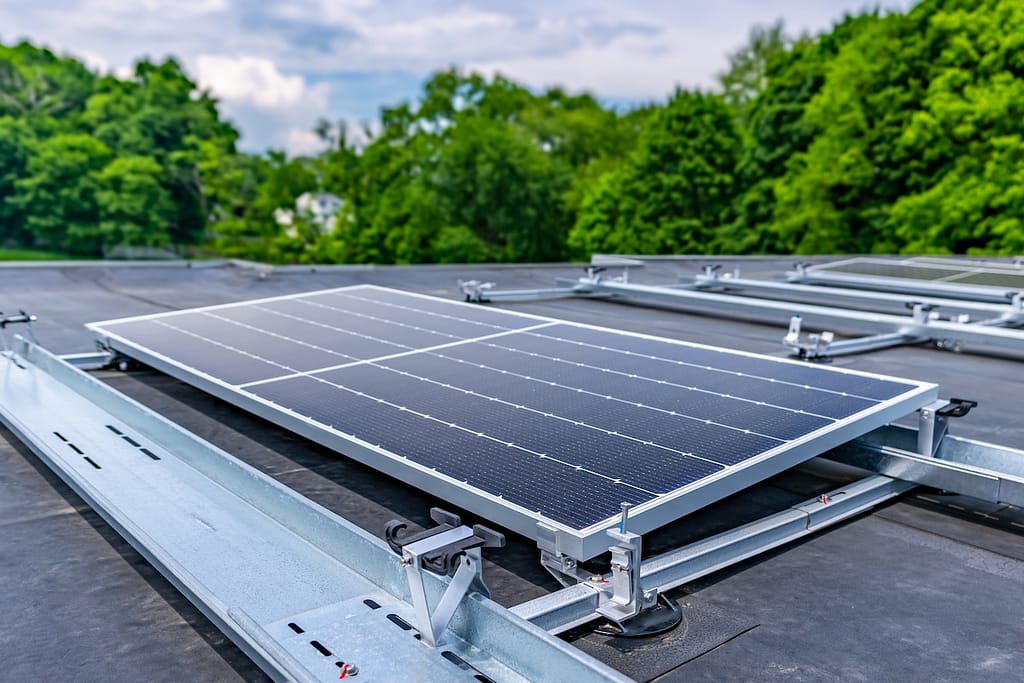
Unlike sloped roofs where panels follow the pitch, solar panels on flat roof surfaces are typically installed using angled mounting racks. These racks tilt the panels toward the sun to maximize energy production.
In Ames and surrounding areas, installers often position panels at an optimal angle to capture sunlight throughout the year. Because flat roofs provide open space, panels can be arranged strategically to improve efficiency and avoid shading from nearby structures.
3 Pros of Installing Solar Panels on a Flat Roof
Flat roofs offer several advantages that make solar installations practical and efficient. Understanding these benefits helps clarify why many property owners choose this setup.
1. Flexible Panel Positioning
Flat roofs allow panels to be positioned at the ideal angle rather than being limited by the roof’s slope. This flexibility can increase overall energy output.
For example, a commercial building with a wide, unobstructed flat roof can angle panels to face south for maximum sun exposure. This level of control is not always possible with pitched roofs.
- Optimized angle: Panels can be tilted for peak performance.
- Better layout control: Installers can space panels evenly for airflow and efficiency.
- Reduced shading impact: Adjustments can be made around vents or HVAC units.
2. Easier Access for Maintenance
Flat roofs make it easier to access solar panels for cleaning, inspection, and repairs. Safe and convenient access reduces long-term maintenance challenges.
For instance, a homeowner with a single-story flat roof can schedule seasonal panel cleaning without complex scaffolding. In Ames and surrounding areas, this accessibility is especially helpful after heavy snow or storms.
- Safer servicing: Less steepness reduces fall risk.
- Simpler cleaning: Easier removal of debris and snow.
- Lower maintenance costs: Reduced labor time compared to steep roofs.
3. Minimal Roof Penetrations
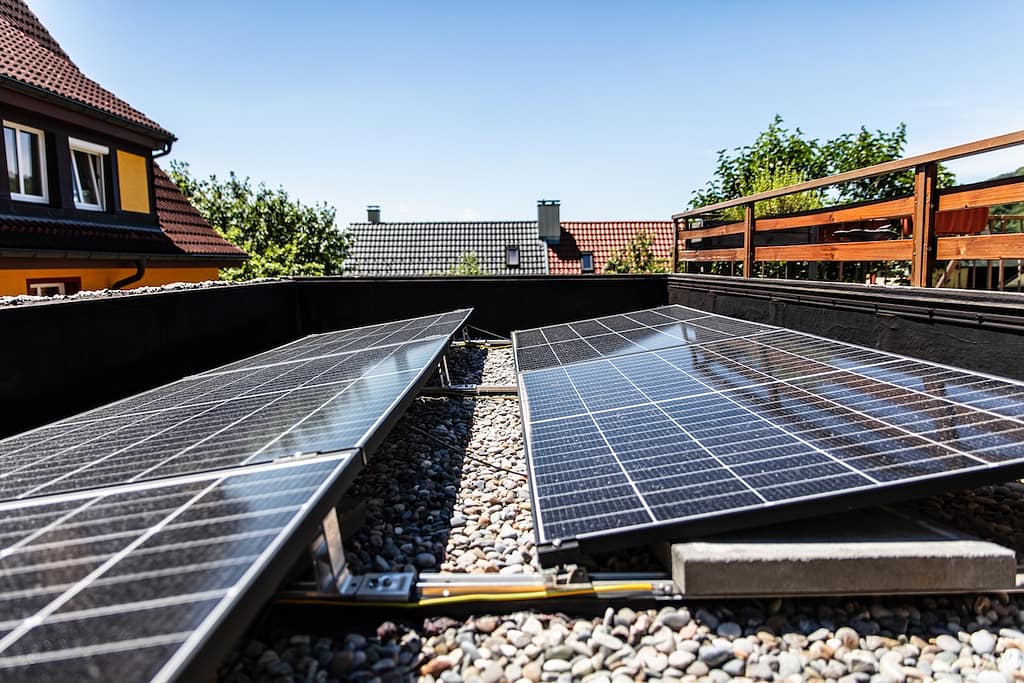
Many flat roof solar systems use ballasted mounting systems. These systems rely on weighted racks rather than penetrating the roof membrane with screws.
Ballasted systems reduce the risk of leaks and preserve waterproof membranes, especially on commercial flat roofing materials such as TPO or EPDM.
- Leak prevention: Fewer penetrations protect roofing integrity.
- Compatible with membrane roofs: Ideal for modern flat roofing systems.
- Preserves warranties: Proper installation maintains manufacturer coverage.
3 Cons of Installing Solar Panels on a Flat Roof
While there are benefits, flat roof solar systems also come with potential challenges that should be carefully evaluated.
1. Drainage Considerations
Flat roofs rely on internal drains or slight slopes to prevent standing water. Solar mounting systems must be designed to avoid blocking drainage paths.
If panels are placed improperly, water can pool around mounting hardware. In Ames and surrounding areas, where snowmelt and spring rains are common, ensuring proper drainage is essential.
- Water pooling risk: Poor layout may block runoff paths.
- Additional planning required: Installers must account for slope direction.
- Maintenance vigilance: Drains should be inspected regularly.
2. Structural Load Requirements
Solar panels and mounting systems add weight to a roof. Although most modern flat roofs can handle this load, structural evaluation is important before installation.
For example, an older commercial building may require reinforcement before supporting a large solar array. Snow accumulation combined with panel weight must also be factored into engineering calculations.
- Weight assessment: Roof structure must support panels and ballast.
- Engineering review: Professional evaluation ensures safety.
- Snow load considerations: Seasonal accumulation increases stress.
3. Visibility and Aesthetic Impact
While flat roofs are less visible from the street, panels mounted at an angle may still be noticeable from certain viewpoints. Some homeowners associations also regulate solar panel visibility.
Property owners should verify local guidelines before installation to avoid compliance issues.
- HOA restrictions: Some neighborhoods have aesthetic regulations.
- Street visibility: Tilted panels may be visible on low-profile homes.
- Design coordination: Placement can minimize visual impact.
Flat Roof Solar Pros and Cons
| Category | Advantages | Challenges |
| Panel Positioning | Adjustable tilt for optimal sunlight | Requires careful layout planning |
| Maintenance | Easy access for cleaning and repairs | Regular drain checks needed |
| Roof Integrity | Ballasted systems reduce penetrations | Improper installation may cause pooling |
| Structural Impact | Compatible with large open roof spaces | Must verify load capacity |
| Aesthetics | Less visible than pitched roof installs | Tilted racks may be noticeable |
Real-Life Example Scenarios
To better understand whether solar panels on flat roof systems make sense, consider these examples.
- Commercial warehouse: A large flat roof with minimal obstructions offers ideal space for maximizing energy production with ballasted mounting systems.
- Modern single-story home: Easy maintenance access and optimal tilt adjustment make flat roof solar a practical solution.
- Older building with limited support: Structural upgrades may be necessary before installing panels safely.
Each situation requires a tailored evaluation to ensure performance and long-term durability.
Is It the Right Choice for You?
Installing solar panels on flat roof systems can be an excellent investment when properly planned and engineered. The flexibility of panel placement, easier maintenance access, and compatibility with ballasted systems make flat roofs attractive for solar energy production.
However, careful attention must be paid to drainage, weight capacity, and layout design. In Ames and surrounding areas, working with experienced professionals ensures your roof structure and solar system work together efficiently and safely.
Evaluate Both Performance and Protection
Deciding whether solar panels on flat roof systems are a good idea depends on your building’s structure, energy goals, and long-term maintenance plans. When designed properly, flat roof solar installations offer excellent efficiency and accessibility.
Heartland proudly serves property owners in Ames and surrounding areas with expert roofing guidance and structural evaluations. Contact Heartland today to schedule your free estimate and learn whether your flat roof is ready to support a solar panel system safely and effectively.

Get Started Today!
From roofing to siding, Heartland Roofing is the team you need to take your home exterior to the next level. All you need to do is reach out! Fill out our contact form or give us a call to get the reliable help that you need.


