

Metal Roof Flashing: Why It Fails & How Pros Seal It Right
September 25,2026
11 Minute Read
Metal roof flashing is the unsung hero of a watertight roof, sealing the joints and transitions where leaks are most likely to start. When it fails, water finds its way into your home long before you might expect, often at chimneys, valleys, and where the roof meets a wall. Understanding why metal flashing fails, and how professionals seal it correctly, helps you protect your roof and catch problems early. This guide walks through the common causes of failure, the warning signs, and the right way to seal flashing.
Here is what you will learn:
- Why it fails: The main reasons metal roof flashing breaks down.
- The warning signs: How to spot failing flashing before it leaks.
- How pros seal it: The techniques that keep flashing watertight for years.
What Metal Roof Flashing Does
Flashing is a small component with a critical job, and understanding its role explains why failures cause so many leaks. It protects your roof’s weakest points.
Flashing Protects the Roof’s Vulnerable Points
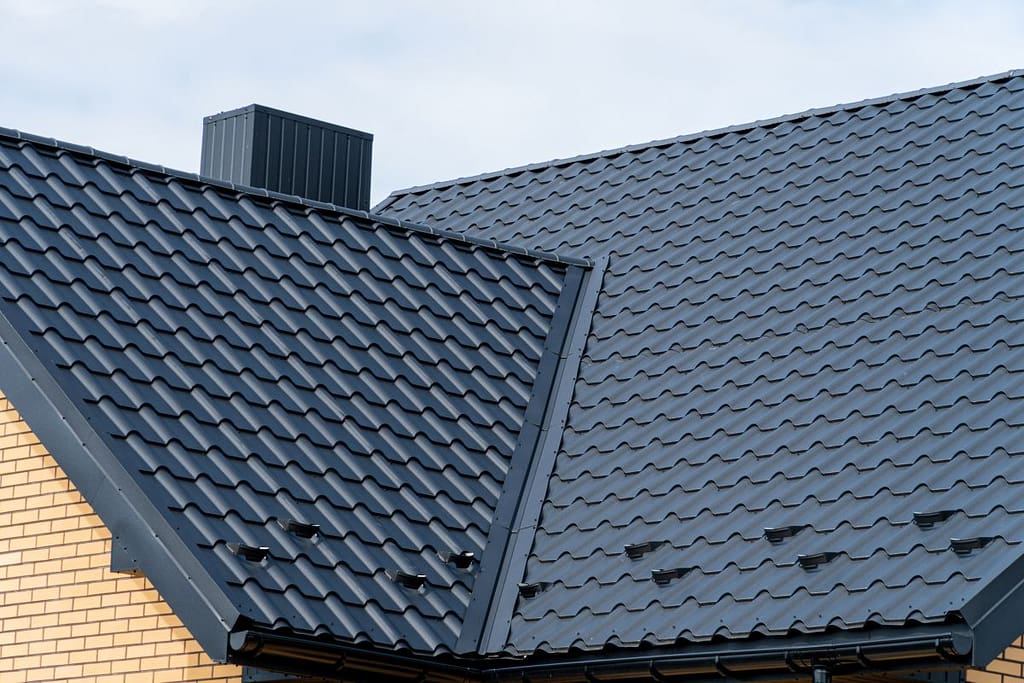
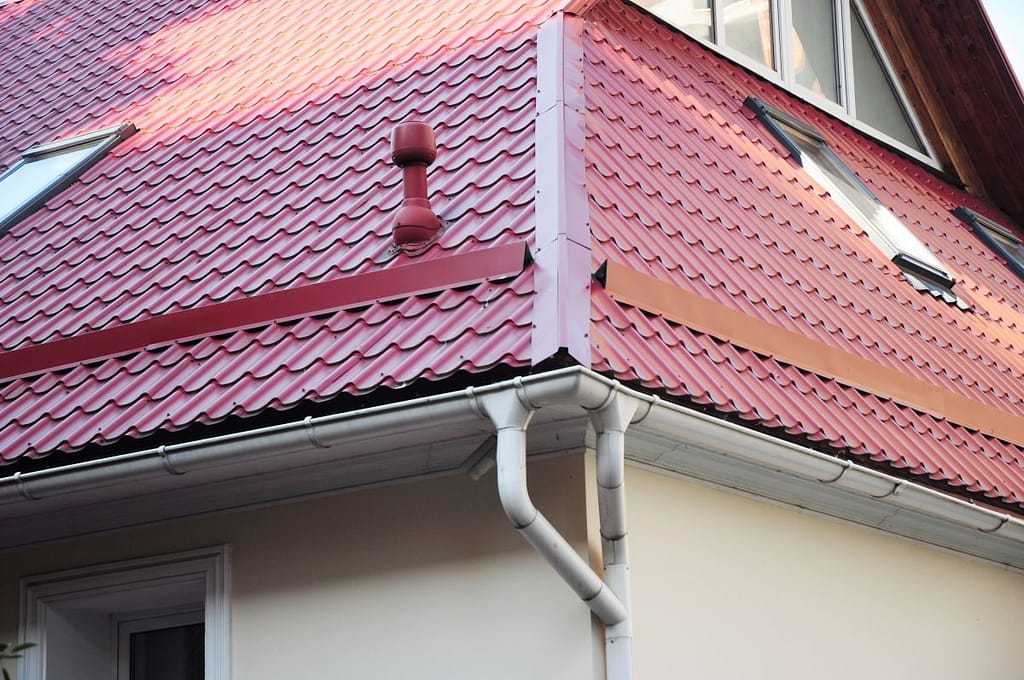
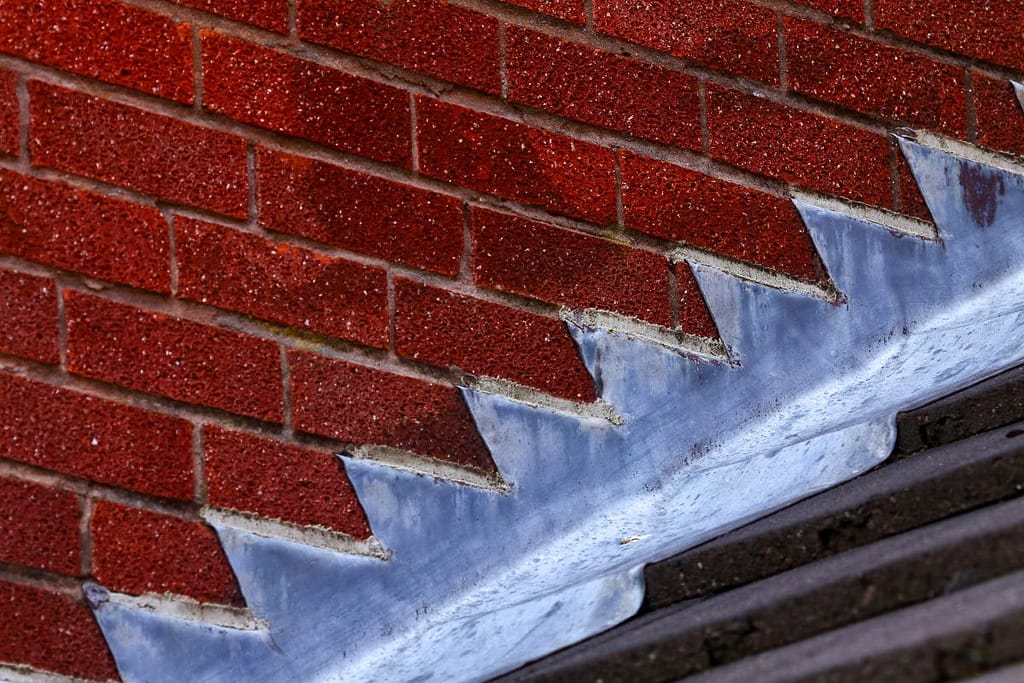
Metal roof flashing is thin metal installed at the joints, edges, and penetrations of your roof to direct water away from the spots where the roof surface is interrupted. Different types are designed for specific roof conditions. You will find it around chimneys, skylights, vents, valleys, and where the roof meets a wall, where step flashing is installed in a stepped pattern to protect that vertical transition, all places where water could otherwise sneak in. Flashing channels water back onto the roof surface so it drains safely instead of seeping into the structure. Drip edge flashing also redirects water away from the fascia at the roof edge. Because these transitions are where roofs are most likely to leak, flashing is one of the most important parts of the system.
- Seals transitions: Protects joints, edges, and penetrations.
- Common spots: Chimneys, skylights, vents, valleys, and walls.
- Directs water: Channels runoff safely off the roof.
- Critical role: Guards the roof’s most leak-prone points.
Why Metal Flashing Deserves Attention
Even on a durable metal roof, the flashing often needs attention before the roofing panels themselves, because it faces constant stress at the roof’s most demanding points. Flashing endures thermal movement, water flow, and weather exposure concentrated at transitions, and choosing the right flashing also depends on the roof design, panel system, and local climate. Keeping flashing sound is one of the best ways to protect your entire roof from water damage. That is why understanding how it fails, and how to seal it right, matters for long-term durability and longevity.
- Wears faster: Flashing faces concentrated stress.
- Constant demands: Thermal movement, water, and weather.
- Protects the roof: Sound flashing prevents water damage.
- Worth understanding: Knowing the failure points helps you act.
5 Reasons Metal Roof Flashing Fails
The reasons below explain why metal flashing breaks down over time. This section introduces them, then breaks each one down so you understand what to watch for on your roof.
1. Thermal Expansion and Contraction
The most fundamental reason metal flashing fails is that metal expands and contracts with temperature changes more than most building materials. According to the Insurance Institute for Business & Home Safety, when metal flashings move due to thermal expansion and contraction, they can loosen or damage fasteners, disengage from cleats and clips, and allow water infiltration at joints. This constant movement, cycle after cycle, is why flashing must be designed and installed to accommodate it. For homeowners across Pleasant Hill and surrounding areas, Iowa’s wide temperature swings make this an especially important factor.
- Metal moves most: It expands and contracts more than other materials.
- Stress on fasteners: Movement loosens and damages them.
- Joints open up: Flashing can disengage and let water in.
- Iowa swings: Wide temperature ranges increase the stress.
2. Failed or Aging Sealant
The sealant that helps secure and seal flashing dries out, cracks, and fails over time, creating small but persistent leak points. Sun, temperature swings, and age cause caulking and sealant to harden and separate from the metal and the roof surface. Once the sealant fails, water can work its way behind the flashing even when the metal itself looks intact. Because sealant has a shorter life than the metal, refreshing it is a common and necessary maintenance task.
- Sealant fails: Caulking dries, cracks, and separates.
- Caused by: Sun, heat, and age break it down.
- Hidden entry: Water gets behind sound-looking metal.
- Shorter life: Sealant needs periodic renewal.
3. Improper Installation
Flashing that was installed incorrectly in the first place is one of the most common reasons it fails prematurely. Flashing that is fastened too rigidly, lacks room for thermal movement, is under-lapped, or relies on sealant instead of proper metalwork will fail early no matter how good the material is. Correct flashing is a matter of skilled fabrication and installation, not just caulk. Poor installation is why the contractor matters as much as the flashing itself.
- Rigid fastening: No room for movement causes failure.
- Poor laps: Under-lapped flashing lets water in.
- Caulk-dependent: Relying on sealant alone is a shortcut.
- Skill matters: Proper flashing is fabricated, not just sealed.
4. Corrosion and Galvanic Reactions
Corrosion, including galvanic corrosion from incompatible metals, can eat away at flashing and create leak points, and the risk varies by material, whether it’s galvanized steel, aluminum, copper, or lead. Over years of exposure, some metals corrode, and when dissimilar metals contact each other, a galvanic reaction can accelerate that corrosion dramatically. Using compatible metals and proper coating is essential to prevent this, which is another reason skilled installation matters. Galvalume is a coated product made from 55% aluminum and 43.4% zinc, and it complies with ASTM A792 Standard for exterior use. Corroded flashing loses its integrity and must be repaired or replaced.
- Corrosion over time: Exposure degrades some metals through oxidation.
- Galvanic reaction: Incompatible metals corrode faster.
- Compatibility matters: Proper metal pairing helps flashing match the roofing material to prevent corrosion, whether the roofing material is asphalt shingles or another suitable system.
- Loses integrity: Corroded flashing must be addressed.
5. Storm and Physical Damage
Wind, hail, falling debris, and foot traffic can bend, dent, or dislodge flashing, breaking its seal. High winds can lift flashing at edges and chimneys, hail can dent and damage it, and careless foot traffic during other work can bend it out of place. Any physical damage that breaks the flashing’s seal creates a path for water. After a major storm, flashing is one of the areas most worth inspecting.
- Wind damage: Can lift flashing at edges and chimneys.
- Hail and debris: Dent and dislodge flashing.
- Foot traffic: Careless steps can bend it.
- Inspect after storms: Flashing is a common damage point.
Warning Signs Your Metal Flashing Is Failing
Knowing the signs of failing flashing helps you catch problems before they become major leaks. A few clues are worth watching for.
The Signs to Watch For
Look for water stains on interior ceilings or walls, visible rust or cracks on the flashing, lifted or loose flashing, and failed sealant at joints. Interior stains, especially near chimneys or walls, often trace back to flashing, while visible damage on the flashing itself is a clear signal. Damp spots or mold in the attic near penetrations also point to flashing problems above. Any of these signs is a reason to have your flashing inspected.
- Interior stains: Often trace to flashing leaks.
- Visible damage: Rust, cracks, or lifted flashing.
- Failed sealant: Cracked or missing caulk at joints.
- Attic clues: Damp spots near penetrations.
Why Prompt Attention Matters
Addressing failing flashing early prevents a small problem from becoming expensive water damage. Because flashing leaks let water travel along framing before it appears inside, the damage often spreads unseen until it is significant. Catching and repairing flashing issues promptly protects your decking, insulation, and interior. Prompt attention is far cheaper than dealing with the hidden damage a slow leak causes and the more extensive repairs that often follow.
- Small becomes big: Early leaks grow into major damage.
- Hidden travel: Water spreads before it shows inside.
- Protects the structure: Prompt repair saves decking and insulation.
- Cheaper early: Fixing flashing beats repairing water damage.
How Professionals Seal Metal Flashing Right
The difference between flashing that lasts and flashing that leaks comes down to how it is installed. Professionals follow specific practices to seal it correctly.
The Techniques That Keep Flashing Watertight
Professionals seal metal flashing by fabricating it correctly, allowing for thermal movement, using compatible materials, and relying on sound metalwork rather than sealant alone. They install fasteners through slotted or oversized holes so the metal can move without loosening, lap and layer flashing so water sheds naturally, and use compatible metals to prevent galvanic corrosion. Sealant is used as a supplement, not a substitute for proper flashing. This combination is what keeps flashing watertight through years of thermal cycling.
- Allow for movement: Slotted fasteners accommodate expansion.
- Proper laps: Layered flashing sheds water naturally.
- Compatible metals: Prevent galvanic corrosion.
- Metalwork first: Sealant supplements, never replaces, good flashing.
Why Professional Installation Matters
Because correct flashing depends on skilled fabrication and installation, professional installation is standard practice for long-term performance. A skilled installer will review roof design details, material compatibility, and sheet-metal thickness before fabricating or installing flashing, along with the layering that keeps water out—details that a rushed or inexperienced job misses. Proper installation also protects any manufacturer warranties on your roof. Choosing an experienced local contractor protects both your investment and your peace of mind.
- Skill required: Correct flashing is fabricated by experts.
- Key knowledge: Movement, compatibility, and layering.
- Warranty protection: Proper work preserves coverage.
- Peace of mind: Experienced installation lasts.
Frequently Asked Questions
Why does metal roof flashing leak?
Metal flashing most often leaks because of thermal movement loosening fasteners and joints, failed sealant, improper installation, corrosion, or storm damage. Because metal expands and contracts significantly with temperature, flashing must be installed to accommodate that movement. When it is not, joints open up and let water in.
How long does metal roof flashing last?
Well-installed metal flashing can last many years, though the sealant that accompanies it typically needs attention sooner. Flashing lifespan depends on the metal, installation quality, exposure, and even material weight affecting long-term performance; coated steel products such as Galvalume can last up to 30 years in Chicago, depending on installation and exposure. Regular inspections help you catch aging sealant or damage before it causes leaks, extending the life of the flashing.
Can metal roof flashing be repaired, or does it need replacing?
It depends on the extent of the problem. Minor issues like failed sealant or a single loose section can often be repaired, while widespread corrosion, damage, or cases where the wrong material or form was used originally often make replacement the better option. A professional inspection can help determine the right choice based on the scope of the project and the relative cost of repair versus replacement.
Is flashing failure covered by insurance?
Storm-related flashing damage, such as from wind or hail, may be covered by homeowners insurance, while failure from age, wear, or poor installation typically is not. Coverage depends on your policy and the cause of the damage. A professional inspection helps document storm damage for a claim.
Can I reseal metal flashing myself?
Small sealant touch-ups may seem simple, but flashing work is best left to a professional because proper flashing depends on metalwork and movement allowance, not just caulk. A do-it-yourself reseal often fails quickly and can mask an underlying problem, so a pro can check whether the issue is failed sealant, damaged trim, or a flashing detail that needs replacement. A professional addresses the true cause.
How often should I have my metal flashing inspected?
Having your roof and flashing inspected at least twice a year, ideally in spring and fall, plus after major storms, helps catch flashing problems early. Flashing and sealant tend to show wear before the roof panels do. Regular inspection is the best protection against flashing leaks.
Why Heartland Is a Smart Choice for Your Metal Roof Flashing
Flashing is the detail that determines whether a metal roof stays watertight, and it takes real skill to fabricate and install correctly. Heartland Roofing, Siding & Solar helps homeowners across Pleasant Hill and surrounding areas find and fix flashing problems, seal transitions the right way, and protect the whole roof system, all with honest, educational guidance rather than high-pressure sales. With an A+ BBB rating and a commitment to quality workmanship, Heartland treats flashing as the critical detail it is, not a minor accessory. Reach out to Heartland today for a free inspection and expert guidance on your metal roof flashing.

Get Started Today!
From roofing to siding, Heartland Roofing is the team you need to take your home exterior to the next level. All you need to do is reach out! Fill out our contact form or give us a call to get the reliable help that you need.


