

Commercial Roof Inspection: What’s Checked & How Often
October 23,2026
10 Minute Read
A commercial roof inspection is one of the smartest, lowest-cost investments a building owner can make, because it catches small problems while they are still cheap to fix instead of after they have disrupted your business. Your roof protects not just the structure but the tenants, inventory, and operations underneath it, and a thorough inspection is how you keep it performing. Knowing what a professional actually checks, and how often you should schedule an inspection, helps you protect your building and plan your budget. This guide covers both.
Here is what you will learn:
- What’s checked: The components a professional inspection covers.
- How often: The right inspection schedule for a commercial roof.
- Why it matters: How regular inspections protect your investment.
Why Commercial Roof Inspections Matter
For a commercial building, inspections are the foundation of protecting a major capital asset. Understanding the payoff makes them a clear priority.
Inspections Catch Problems Before They Spread
A professional inspection finds small issues like seam separations, failing flashing, and clogged drains before they become leaks that damage your building and interrupt operations. On a commercial roof, a minor problem that goes unnoticed can quietly let water into the insulation, deck, and interior, turning an inexpensive repair into a major one. Regular inspections are how you catch these issues early. For a building owner, that early detection is the difference between a small repair and a business disruption.
- Finds issues early: Catches seams, flashing, and drainage problems.
- Prevents leaks: Stops small problems from reaching the interior.
- Avoids disruption: Protects operations from roof failures.
- Early is cheap: Small fixes beat major repairs.
Proactive Inspection Extends Roof Life
Regular inspection and maintenance measurably extend the life of a commercial roof, which protects your capital budget. According to a 15-year study by Firestone Building Products and ProLogis, proactively maintained commercial roofs lasted an average of 21 years, compared to just 13 years for roofs maintained reactively. That is eight additional years of service from the same roof, simply through regular inspection and upkeep. For building owners across Grimes and surrounding areas, that extended lifespan represents real deferred capital expense and lower life-cycle costs.
- Extends roof life: Maintained roofs last far longer.
- 21 versus 13 years: Proactive care adds about eight years.
- Lower life-cycle cost: Deferred replacement saves capital.
- Inspection-driven: Regular checks make it possible.
7 Things a Commercial Roof Inspection Checks
A thorough commercial roof inspection covers far more than a quick look at the surface. This section introduces the scope, then breaks down the key components a professional examines.
1. The Roof Membrane or Surface
The inspector starts with the roof membrane or surface itself, looking for damage, wear, and signs of aging across the field of the roof. On a flat or low-slope commercial roof, this means checking the TPO, EPDM, modified bitumen, or built-up surface for punctures, blistering, cracking, shrinkage, and areas of thinning or wear. The condition of the membrane is the foundation of the roof’s performance. Catching surface problems early is central to any inspection.
- Surface condition: Checks for punctures, blisters, and cracks.
- Membrane type: TPO, EPDM, modified bitumen, or built-up.
- Signs of aging: Thinning, shrinkage, and wear.
- The foundation: Membrane condition drives performance.
2. Seams and Flashing
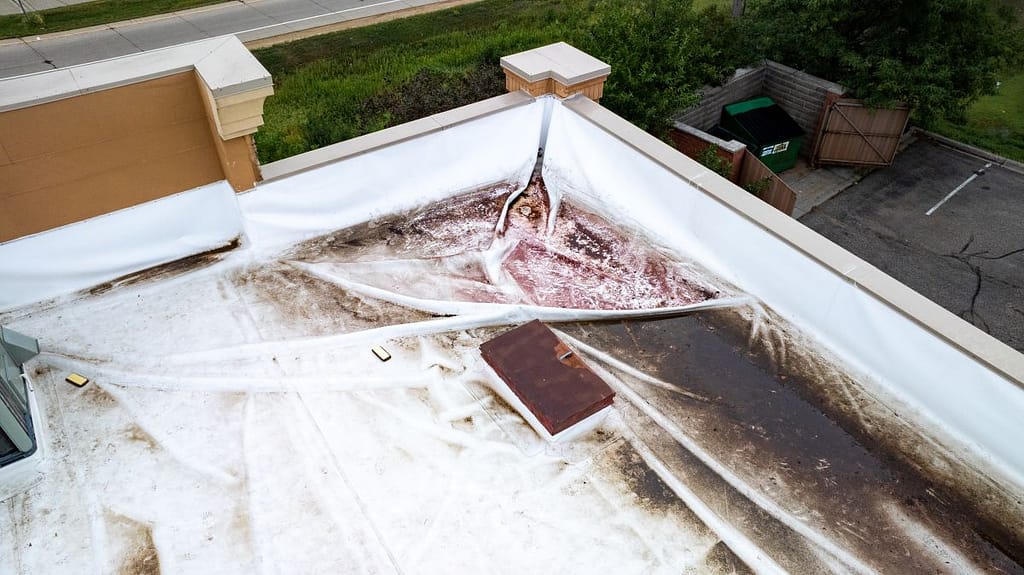
The inspector closely examines the seams and flashing, since these transitions are where commercial roofs most often leak. Seams between membrane sheets, and the flashing around parapets, curbs, and penetrations, are the weakest points in the system and the first place water tends to get in. The inspector checks for separation, lifting, cracking, and failed sealant at every one of these details. Because so many leaks start here, seams and flashing get special attention.
- Weakest points: Seams and flashing leak first.
- Checks transitions: Parapets, curbs, and penetrations.
- Looks for: Separation, lifting, and failed sealant.
- Special attention: Most leaks start at these details.
3. Rooftop Penetrations and Equipment
Every pipe, vent, drain, skylight, and piece of rooftop equipment is a penetration that must be sealed, so the inspector checks each one. Commercial roofs often carry extensive HVAC units, vents, and other equipment, and the flashing and seals around each penetration are common failure points. The inspector verifies these are watertight and that equipment has not damaged the surrounding membrane. With so many penetrations on a commercial roof, this is a critical part of the inspection.
- Every penetration: Pipes, vents, drains, and skylights.
- Rooftop equipment: HVAC units and their flashing.
- Common failures: Seals around penetrations wear.
- Verifies watertight: Each detail is checked.
4. Drainage and Ponding
The inspector evaluates the roof’s drainage system and looks for ponding water, which is one of the most damaging problems on a flat roof. Drains, scuppers, and gutters are checked to confirm they are clear and functioning, and the inspector notes any areas where water stands rather than draining. Ponding accelerates membrane wear and adds structural load, so identifying it early matters. Proper drainage is essential to a commercial roof’s longevity.
- Checks drainage: Drains, scuppers, and gutters.
- Looks for ponding: Standing water signals a problem.
- Why it matters: Ponding accelerates wear and adds load.
- Clears blockages: Confirms water can drain freely.
5. Interior and Underside Signs
A complete inspection includes checking the interior, looking at ceilings and the underside of the roof deck for signs of water intrusion. Water stains, damp insulation, or discoloration inside the building often reveal leaks that are not obvious from the roof surface. Checking the interior helps the inspector trace problems and catch intrusion early. This inside-and-out approach is what makes an inspection thorough.
- Checks inside: Ceilings and the underside of the deck.
- Reveals leaks: Interior stains show hidden intrusion.
- Traces problems: Helps locate the real source.
- Inside and out: A thorough inspection covers both.
6. Edges, Parapets, and Roofline Details
The inspector examines the roof edges, parapet walls, copings, and perimeter details, which are exposed to significant stress and a frequent source of problems. Wind uplift concentrates at the edges and corners of a commercial roof, and the coping and edge metal that protect these areas can loosen or fail over time. The inspector checks these details for secure attachment and watertightness. Edge and parapet condition is an important and often overlooked part of the inspection.
- High-stress areas: Edges and corners face wind uplift.
- Checks coping: Edge metal and parapet caps.
- Looks for: Loose or failing perimeter details.
- Often overlooked: Edges deserve close attention.
7. Documentation and Reporting
A professional inspection ends with thorough documentation, including photos and a written report of the roof’s condition and any recommended actions. Good documentation creates a record of the roof’s condition over time, supports warranty requirements, and helps you budget for repairs and eventual replacement. The report should clearly prioritize any issues found. This documentation is what turns an inspection into a useful planning tool.
- Written report: Documents condition and recommendations.
- Photos: A visual record of the roof’s state.
- Supports warranties: Satisfies documentation requirements.
- Aids budgeting: Helps you plan repairs and replacement.
How Often Should a Commercial Roof Be Inspected?
Knowing the right inspection frequency helps you protect the roof without over- or under-doing it. A clear schedule is the goal.
The Recommended Inspection Schedule
Most roofing professionals recommend inspecting a commercial roof at least twice a year, typically in spring and fall, plus after any major storm. The twice-yearly schedule lets you check the roof after winter’s snow and ice and again before winter returns, catching seasonal wear in both directions. Inspecting after major storms catches wind, hail, and debris damage promptly. This rhythm is the baseline for protecting a commercial roof.
- Twice a year: Spring and fall is the standard.
- After storms: Check following wind, hail, or heavy weather.
- Seasonal timing: Catches wear from winter and summer.
- The baseline: A solid schedule for most roofs.
When to Inspect More Often
Some commercial roofs benefit from more frequent inspection, including older roofs, those with extensive rooftop equipment, and buildings in harsh climates. An aging roof nearing the end of its life, a roof with heavy foot traffic from equipment servicing, or one that has had past problems warrants closer monitoring. Buildings in storm-prone areas like Iowa may also need extra attention after severe weather. Matching the inspection frequency to your specific roof protects it best.
- Older roofs: Aging systems need closer monitoring.
- Heavy equipment: Foot traffic raises inspection needs.
- Harsh climates: Storm-prone areas warrant extra checks.
- Match the roof: Tailor frequency to your building.
Frequently Asked Questions
How often should a commercial roof be inspected?
Most professionals recommend at least twice a year, typically in spring and fall, plus an inspection after any major storm. Older roofs, those with extensive rooftop equipment, and buildings in harsh climates may benefit from more frequent checks. Regular inspection catches small issues before they become costly.
What does a commercial roof inspection include?
A thorough inspection covers the roof membrane or surface, seams and flashing, rooftop penetrations and equipment, drainage and ponding, interior signs of water intrusion, and edge and parapet details, followed by a written report with photos. This inside-and-out approach catches problems a surface-only look would miss.
How much does a commercial roof inspection cost?
Inspection costs vary by roof size, complexity, and provider, and many contractors offer inspections as part of a maintenance program. Compared to the cost of undetected damage, an inspection is an inexpensive investment. Ask providers what their inspection includes and whether it comes with documentation.
Can regular inspections really extend my roof’s life?
Yes. Industry research has found that proactively maintained commercial roofs last significantly longer than reactively maintained ones, often by several years. Regular inspection is the foundation of that proactive care, catching small issues before they shorten the roof’s life. The extended lifespan represents real savings in deferred replacement.
Should I inspect my commercial roof after a storm?
Absolutely. Major storms with wind, hail, or heavy debris can damage a commercial roof in ways that are not always obvious from the ground. A prompt post-storm inspection catches damage early, supports any insurance documentation, and prevents small damage from becoming a leak. It is one of the most important times to inspect.
Who should perform a commercial roof inspection?
A qualified, experienced commercial roofing professional should perform the inspection, since commercial systems require specific expertise and the inspector needs to safely access and evaluate the roof. A professional knows the failure patterns of your membrane type and can document findings properly. Avoid relying on an untrained eye for a major capital asset.
Why Heartland Is a Smart Choice for Your Commercial Roof Inspection
A commercial roof is a major investment, and regular professional inspection is the most cost-effective way to protect it. Heartland Roofing, Siding & Solar helps commercial property owners across Grimes and surrounding areas with thorough, documented roof inspections that catch problems early and support smart budgeting, all backed by an A+ BBB rating and honest, educational guidance rather than high-pressure sales. From the membrane to the flashing to the drainage, Heartland checks what matters and gives you a clear picture of your roof’s condition. Reach out to Heartland today for a free inspection and expert guidance on your commercial roof.

Get Started Today!
From roofing to siding, Heartland Roofing is the team you need to take your home exterior to the next level. All you need to do is reach out! Fill out our contact form or give us a call to get the reliable help that you need.


