

Attic Mold Removal: The 6 Steps for Doing It Safely
February 05,2026
5 Minute Read
When it comes to maintaining a healthy home, few issues are as concerning as attic mold. Knowing how to handle attic mold removal safely is essential to protect your indoor air quality and prevent structural damage. For homeowners in Iowa City and surrounding areas, understanding the right methods, materials, and safety practices ensures mold is treated effectively and doesn’t return.
- Health protection: Mold spores can aggravate allergies and respiratory problems.
- Structural safety: Prevents wood rot and damage to insulation or roof decking.
- Long-term prevention: Helps maintain proper ventilation and moisture balance in your attic.
What Causes Mold Growth in Attics
Mold in attics often forms due to moisture buildup from poor ventilation, roof leaks, or condensation. When warm indoor air rises and meets cold surfaces, it releases moisture that can settle on rafters, insulation, or decking. Over time, this damp environment creates the perfect breeding ground for mold.
In Iowa City and surrounding areas, seasonal humidity and fluctuating temperatures can make attics particularly vulnerable. Even minor roof leaks or blocked vents can quickly lead to visible mold growth if not addressed.
Signs You May Have Attic Mold
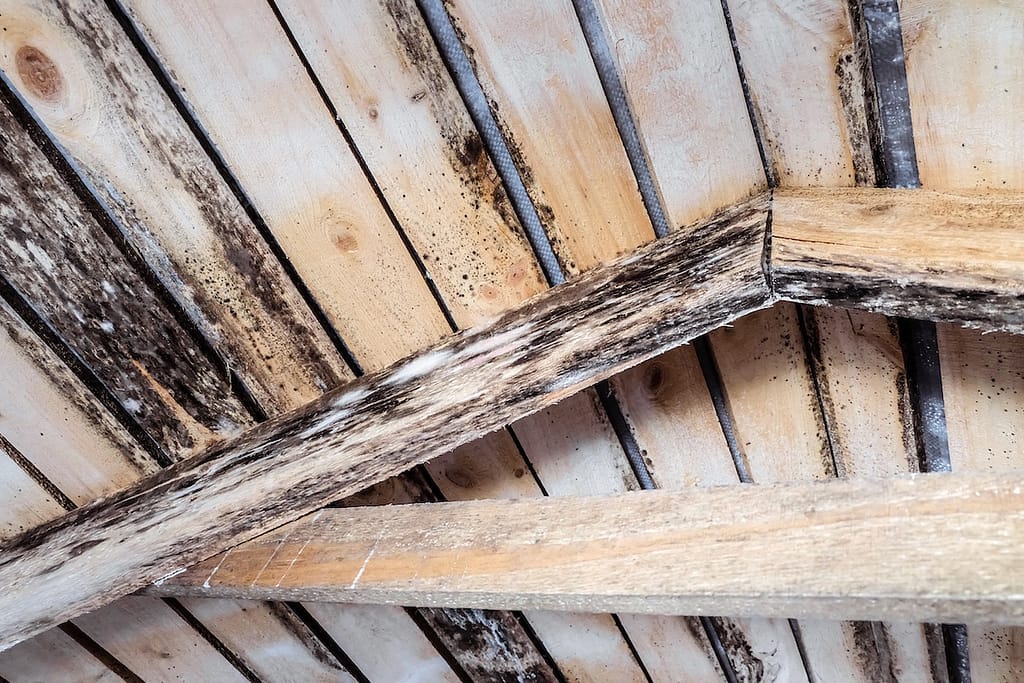
Because attics aren’t frequently inspected, mold problems often go unnoticed until they become severe. Keep an eye out for these common warning signs.
- Musty odors: Persistent earthy smells coming from the attic or upper floors.
- Discoloration: Black, green, or white patches on rafters, insulation, or plywood.
- Damp insulation: Wet or clumped insulation may indicate excess moisture.
- Roof leaks or staining: Water marks on ceilings often point to moisture intrusion above.
If you spot one or more of these indicators, a careful inspection and prompt cleanup are necessary to stop mold from spreading to other areas.
Safety Precautions Before Starting
Mold cleanup should always begin with proper safety measures. Disturbing mold releases spores that can irritate your lungs and skin. Always wear protective equipment before entering the attic space.
- Respirator mask: Use an N95 or higher-rated mask to filter airborne spores.
- Gloves and goggles: Prevent direct contact with mold and cleaning chemicals.
- Protective clothing: Wear long sleeves and disposable coveralls if possible.
- Adequate lighting and ventilation: Work during daylight or with proper lighting and open vents when possible.
6 Steps for Safe Attic Mold Removal
Removing attic mold correctly requires patience, precision, and care. Follow these six steps to handle the process safely and effectively.
1. Identify and Fix the Source of Moisture
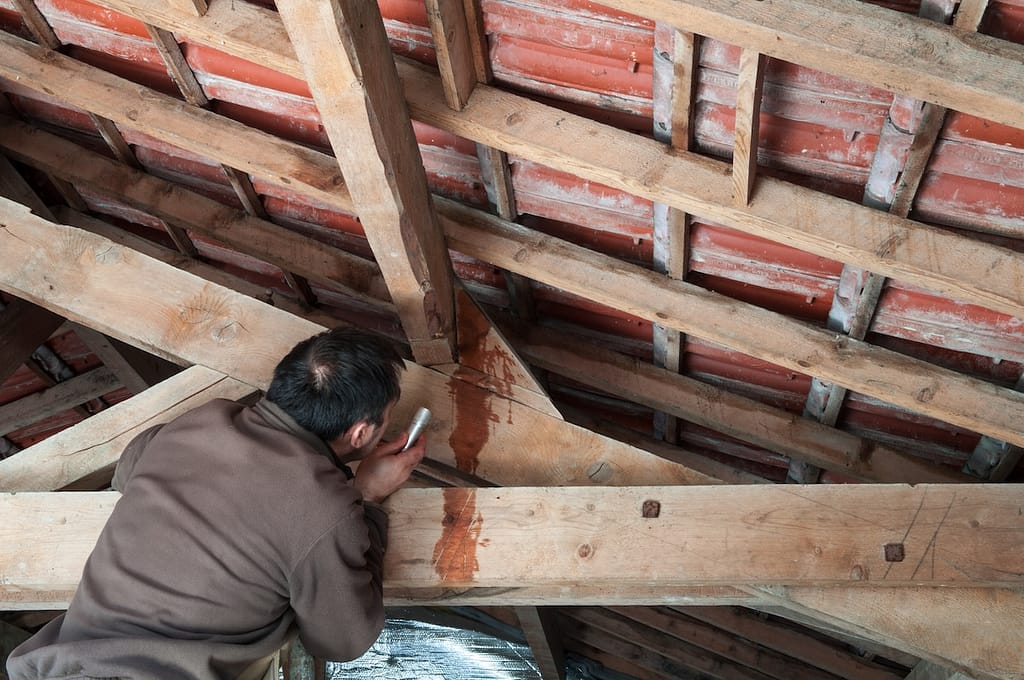
Before removing mold, it’s critical to eliminate the underlying cause of moisture. Look for roof leaks, blocked vents, or condensation near HVAC components.
If moisture isn’t controlled, mold will likely return no matter how thoroughly you clean. In Iowa City and surrounding areas, ensuring adequate attic ventilation is key to keeping humidity levels low throughout the year.
2. Seal Off the Work Area
Mold spores spread easily through air movement. Seal off the attic from the rest of the house by closing doors, covering vents, and placing plastic sheeting over openings.
This helps prevent contamination of living spaces while you work. Use duct tape or painter’s tape to secure the barriers tightly.
3. Remove Contaminated Materials
Porous materials like insulation, cardboard, or drywall often hold moisture and mold spores. These items typically need to be discarded rather than cleaned.
Wear gloves and a mask while bagging all contaminated materials. Seal the bags completely before disposing of them according to local waste management guidelines.
4. Clean Surfaces Thoroughly
Once contaminated materials are removed, focus on cleaning wood and other hard surfaces. Scrub affected areas with a mix of water and mild detergent, or use a commercial mold cleaner specifically designed for attic use.
Avoid using bleach on wood, as it may not penetrate deeply enough to kill mold roots. Instead, choose products labeled for mold remediation on porous building materials.
5. Dry the Area Completely
After cleaning, ensure the attic is completely dry before replacing insulation or closing off the area. Use fans, dehumidifiers, or natural ventilation to speed up the drying process.
This step is crucial because lingering moisture encourages regrowth. The attic should feel dry to the touch and show no condensation on cold surfaces before restoration begins.
6. Apply a Mold-Resistant Treatment
To prevent future mold growth, apply a mold-resistant sealant or encapsulant to cleaned surfaces. These coatings create a barrier that resists moisture absorption and inhibits spore growth.
Be sure to follow manufacturer instructions for safe application. Once the sealant has dried, you can reinstall insulation and restore any removed materials.
Preventing Mold from Returning
The best long-term solution to attic mold is prevention. Addressing ventilation and moisture control reduces the likelihood of recurrence.
- Improve attic ventilation: Ensure soffit and ridge vents are clear and functional.
- Repair roof leaks immediately: Even small leaks can create lasting moisture problems.
- Monitor humidity: Keep indoor humidity below 50% to discourage mold growth.
- Insulate properly: Prevent warm air from reaching cold roof surfaces where condensation can form.
When to Seek Professional Help
While small patches of mold can often be handled safely by homeowners, extensive contamination may require professional remediation. Large infestations can spread quickly and pose health risks if not properly contained.
If mold covers an area larger than 10 square feet or has affected the roof structure, insulation, or ventilation system, it’s best to contact a certified mold remediation specialist.
Maintain a Clean, Dry, and Healthy Attic
Learning the proper techniques for attic mold removal helps you protect your home’s structure and indoor air quality. By identifying moisture sources, cleaning carefully, and preventing recurrence, you can keep your attic safe and mold-free for years to come.
For homeowners in Iowa City and surrounding areas, consistent attic inspections, moisture control, and good ventilation are the best ways to ensure mold never becomes a recurring issue. Reach out to Heartland today to learn more.

Get Started Today!
From roofing to siding, Heartland Roofing is the team you need to take your home exterior to the next level. All you need to do is reach out! Fill out our contact form or give us a call to get the reliable help that you need.


